Ingredients
Equipment
Method
- Melt Butter, Sugar, and Honey: Combine the unsalted butter, granulated sugar, and honey in a medium saucepan over medium heat. Stir constantly until the butter melts and the mixture comes to a gentle simmer and turns a rich amber color.
- Activate the Baking Soda: Remove the saucepan from the heat and immediately whisk in the baking soda. The mixture will foam up significantly—this chemical reaction is what gives the layers their light, rise-filled texture. Let it cool for 5 minutes.
- Form the Dough: Whisk the beaten eggs into the warm honey mixture. Gradually add 3 1/2 cups of flour, stirring with a wooden spoon until a soft, pliable dough forms. If it is too sticky to handle, incorporate the remaining 1/2 cup of flour. Divide the dough into 8 equal portions and shape into small balls.
- Roll and Bake the Layers: Preheat your oven to 375°F (190°C). Roll each ball of dough out directly onto a piece of parchment paper into a thin, 8-inch circle. Prick the surface lightly with a fork. Bake each layer for 4 to 5 minutes until golden brown. Immediately use an 8-inch round pan or plate to trim the edges while the layer is still hot. Save the baked scrap pieces for the final crumb coating.
- Make the Frosting: In a large bowl, whip the heavy whipping cream, powdered sugar, and vanilla extract until stiff peaks form. In a separate bowl, beat the softened cream cheese and chilled sour cream together until smooth, then gently fold the whipped cream into the sour cream mixture until light and fluffy.
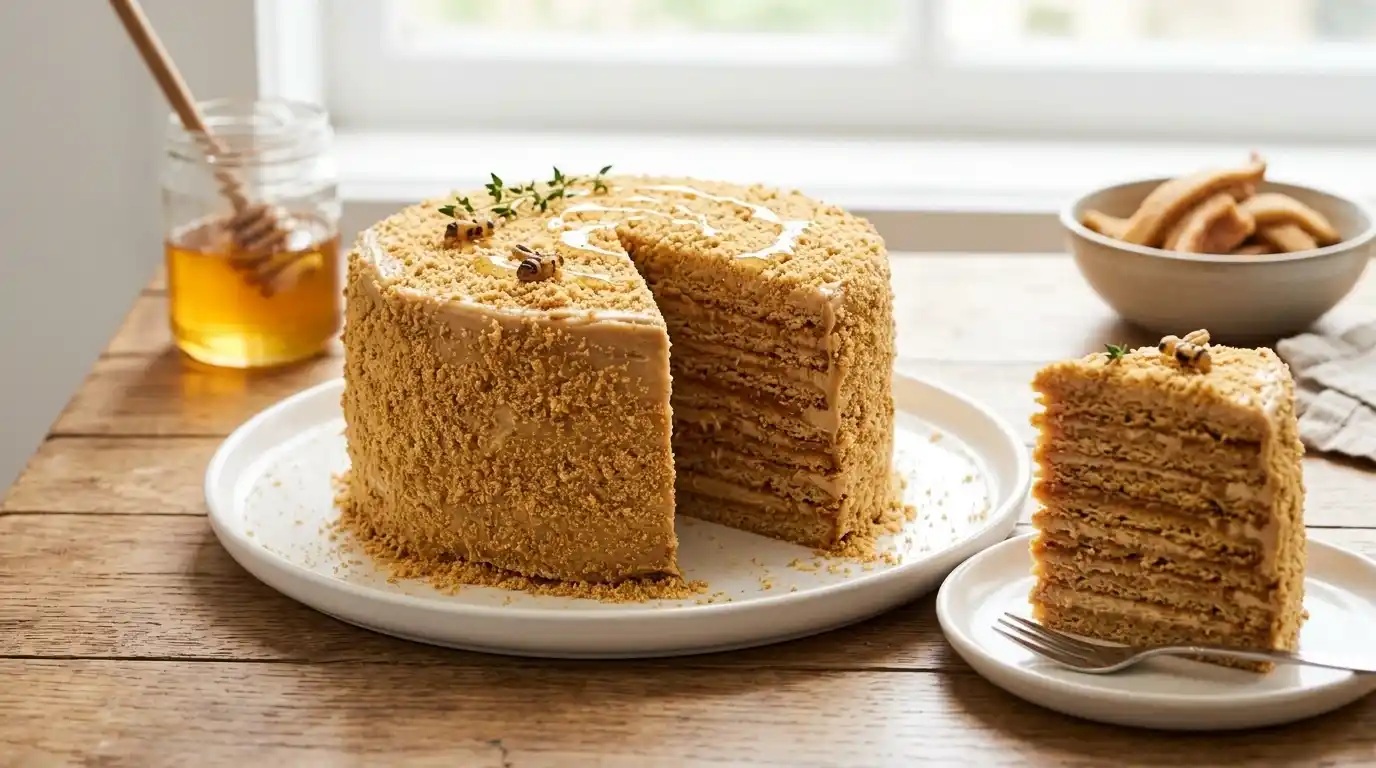
- Assemble the Cake: Place the first honey layer on a serving platter. Spread a generous, even layer of frosting over it. Repeat the process, stacking the remaining baked layers and frosting between each one, as well as coating the outside top and sides of the entire cake.
- Crumb and Rest: Pulse the reserved baked pastry scraps in a food processor until fine crumbs form. Press the crumbs all over the top and sides of the frosted cake. Cover loosely and refrigerate for at least 8 hours—or preferably overnight—to allow the layers to soften completely before slicing and serving.
Notes
The Resting Period is Mandatory: Do not skip the overnight chilling time! When first assembled, the layers are firm; resting in the fridge is what allows the moisture from the cream to transform the pastry into a soft, tender cake texture.Rolling Hot or Warm: If the dough stiffens up while you are rolling out the individual layers, return it to a warm spot or gently microwave it for 10 seconds to make rolling effortless.Sour Cream Selection: Always use full-fat sour cream to ensure the frosting remains rich, stable, and thick without running down the sides of the cake.