Ingredients
Equipment
Method
- Soak the Rice Noodles: Place the dry rice noodles into a large bowl and cover them with warm tap water. Let them soak for 25 to 30 minutes until they are pliable and soft, but still slightly firm to the bite (al dente). Drain thoroughly in a colander.
- Mix the Sauce: In a small mixing bowl, whisk together the tamarind paste, fish sauce, brown sugar, rice vinegar, water, and sriracha until the sugar dissolves completely. Set aside.
- Cook the Chicken: Heat 1.5 tablespoons of vegetable oil in a large wok or skillet over medium-high heat. Add the sliced chicken and stir-fry for 4 to 5 minutes until fully cooked and lightly golden. Remove the chicken from the wok and set it aside on a plate.
- Aromatics and Eggs: Add the remaining 1.5 tablespoons of oil to the same hot wok. Toss in the minced garlic and diced shallot, stir-frying for 30 seconds until fragrant. Push the aromatics to one side of the wok, pour the beaten eggs into the empty side, and scramble them quickly with a spatula until just set.
- Toss Noodles and Sauce: Add the drained rice noodles and the prepared pad thai sauce directly into the wok with the eggs and aromatics. Toss everything continuously over medium-high heat for 2 to 3 minutes until the noodles absorb the sauce and soften evenly.
- Combine and Finish: Return the cooked chicken to the wok along with half of the fresh bean sprouts and green onion pieces. Toss vigorously for another 1 to 2 minutes until everything is piping hot and well combined.
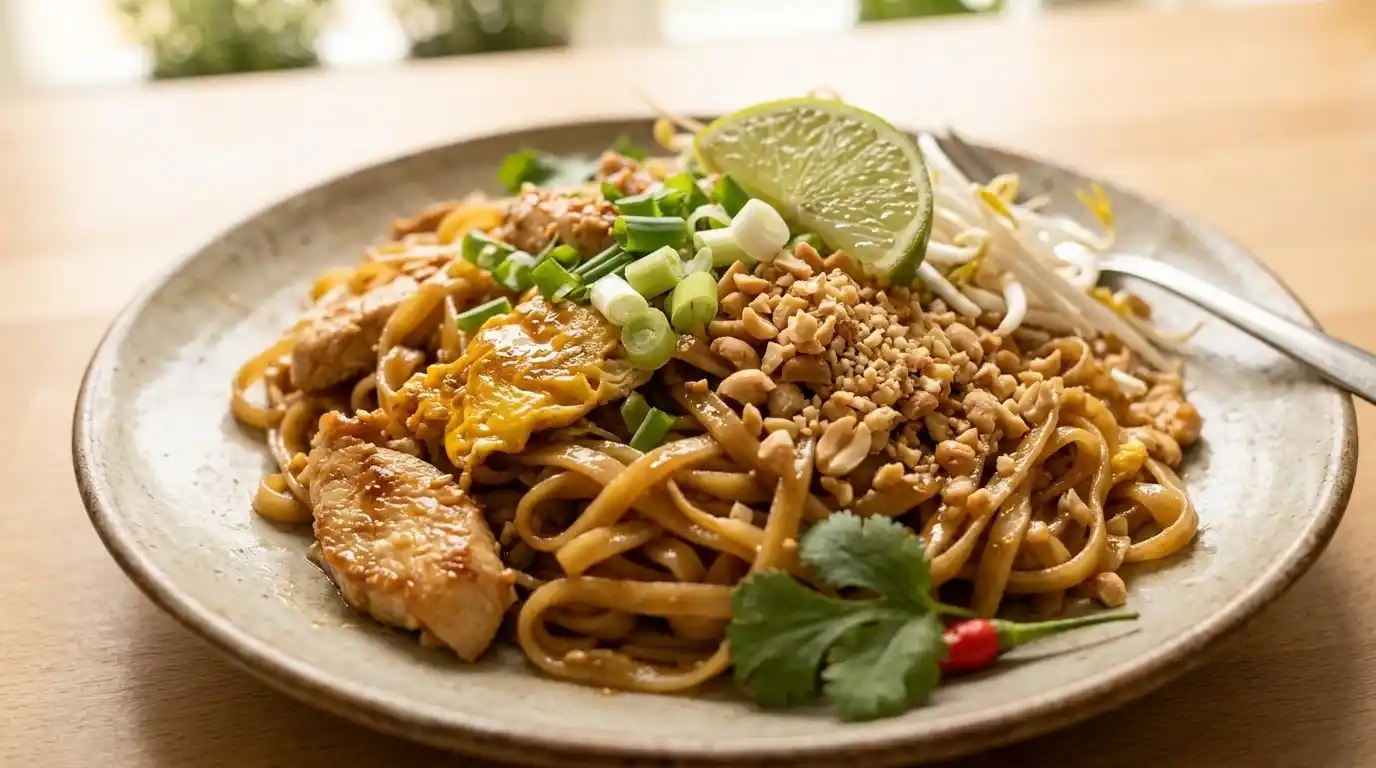
- Garnish and Serve: Remove from heat, transfer to serving plates, and garnish generously with the remaining fresh bean sprouts, chopped roasted peanuts, and lime wedges on the side.
Notes
Do Not Over-Soak Noodles: Be careful not to soak your rice noodles in boiling water or leave them too long in warm water; they will finish cooking in the hot wok sauce. Over-soaked noodles turn mushy.
The Importance of Tamarind: Tamarind paste provides the signature tangy backbone of authentic pad thai. Do not substitute lemon or lime juice for the tamarind, as it changes the traditional flavor profile.
Cook in Small Batches if Needed: If your wok is not large enough, avoid overcrowding it, as excess moisture will cause the noodles to steam and stick together instead of stir-frying correctly.