
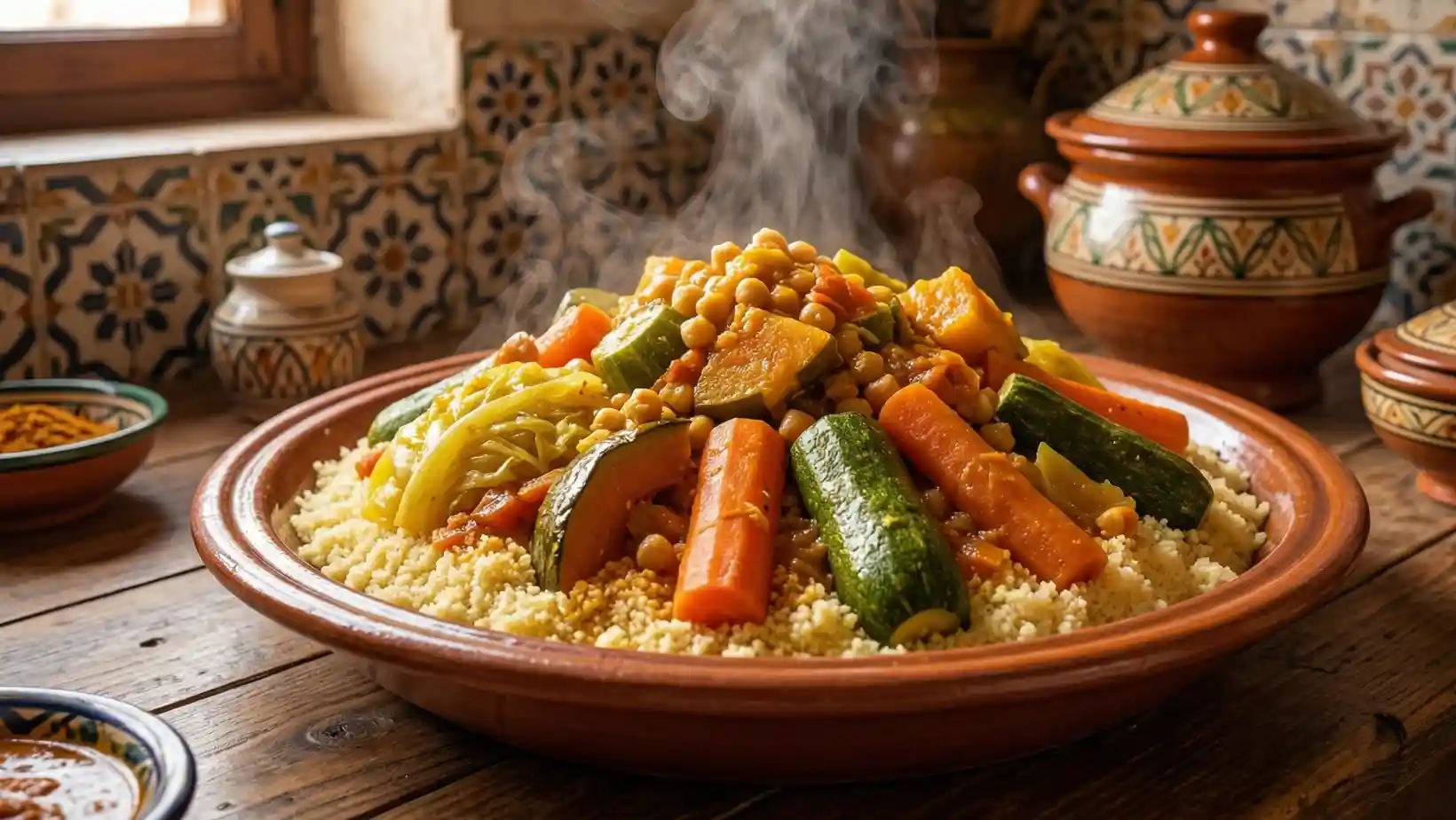
Authentic Moroccan Couscous Recipe: The #1 Seven-Vegetable Guide
Authentic Moroccan Couscous Recipe: The #1 Seven-Vegetable Guide
⭐️⭐️⭐️⭐️⭐️ (4.9/5 Rating) | 🍽️ Servings: 8 | ⏱️ Total Time: 3 hours 30 minutes | 📸 Updated March 2026
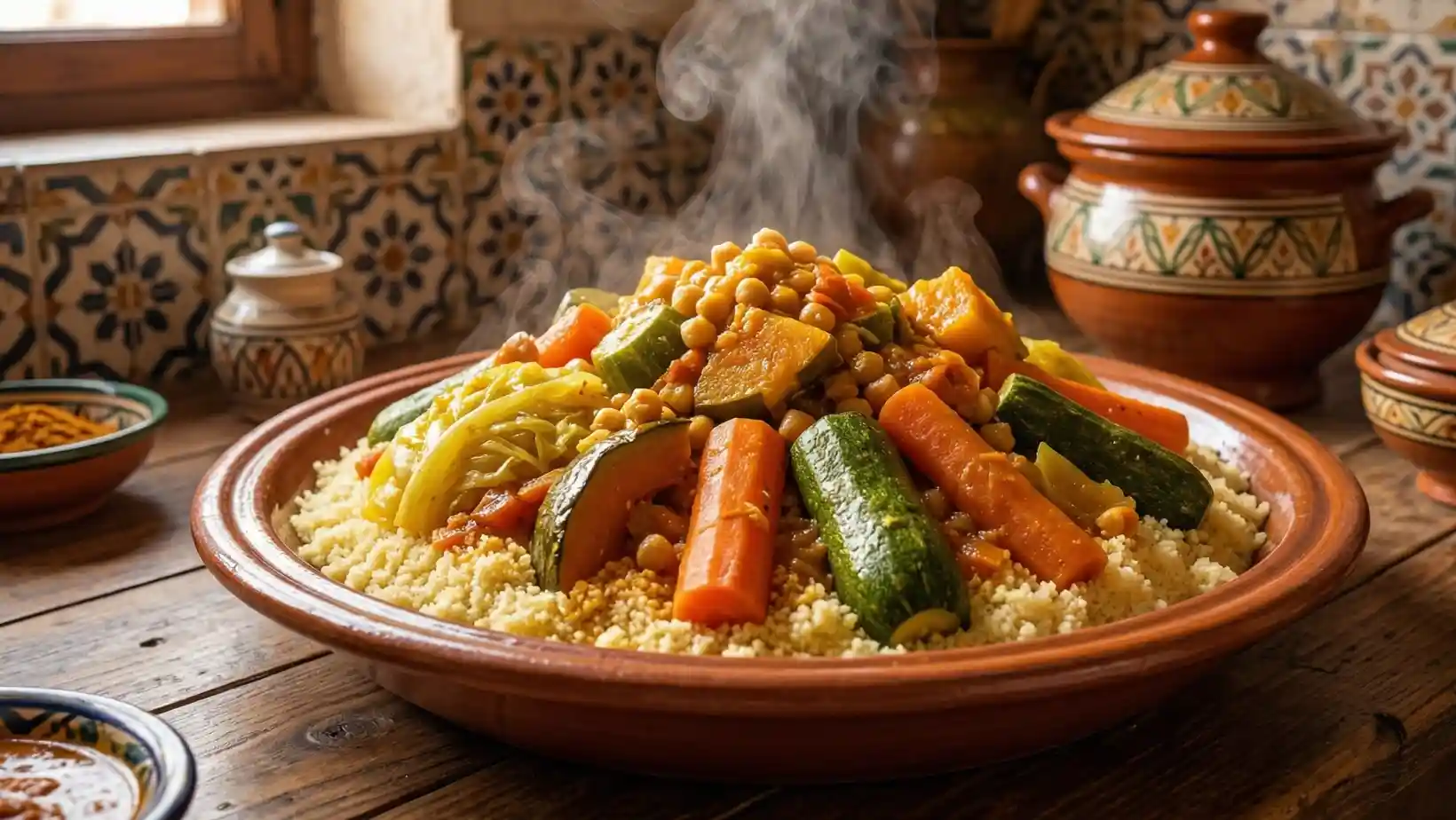
Master the perfect moroccan couscous recipe at home with our definitive guide. This #1 authentic recipe shows you how to make unbelievably fluffy couscous served with a rich, aromatic stew of seven tender vegetables and succulent meat. Dive into the heart of moroccan food recipes and bring the vibrant flavors of North Africa to your table with our step-by-step instructions.
Table of Contents
The Science of Moroccan Food Recipes
Beyond its incredible flavor, traditional moroccan food recipes offer a masterclass in balanced nutrition. This couscous dish, in particular, is a powerhouse of essential nutrients. The generous array of seven vegetables provides a spectrum of vitamins, minerals, and dietary fiber crucial for gut health and overall well-being. From the Vitamin A in carrots to the Vitamin C in bell peppers and the iron in chickpeas, each component plays a vital role. The semolina-based couscous offers complex carbohydrates for sustained energy, while the lean meat provides high-quality protein. Furthermore, the traditional Moroccan spice blend, including turmeric, ginger, and saffron, not only elevates the flavor but also brings potent anti-inflammatory and antioxidant properties, making this a meal that nourishes both body and soul.
What You’ll Need
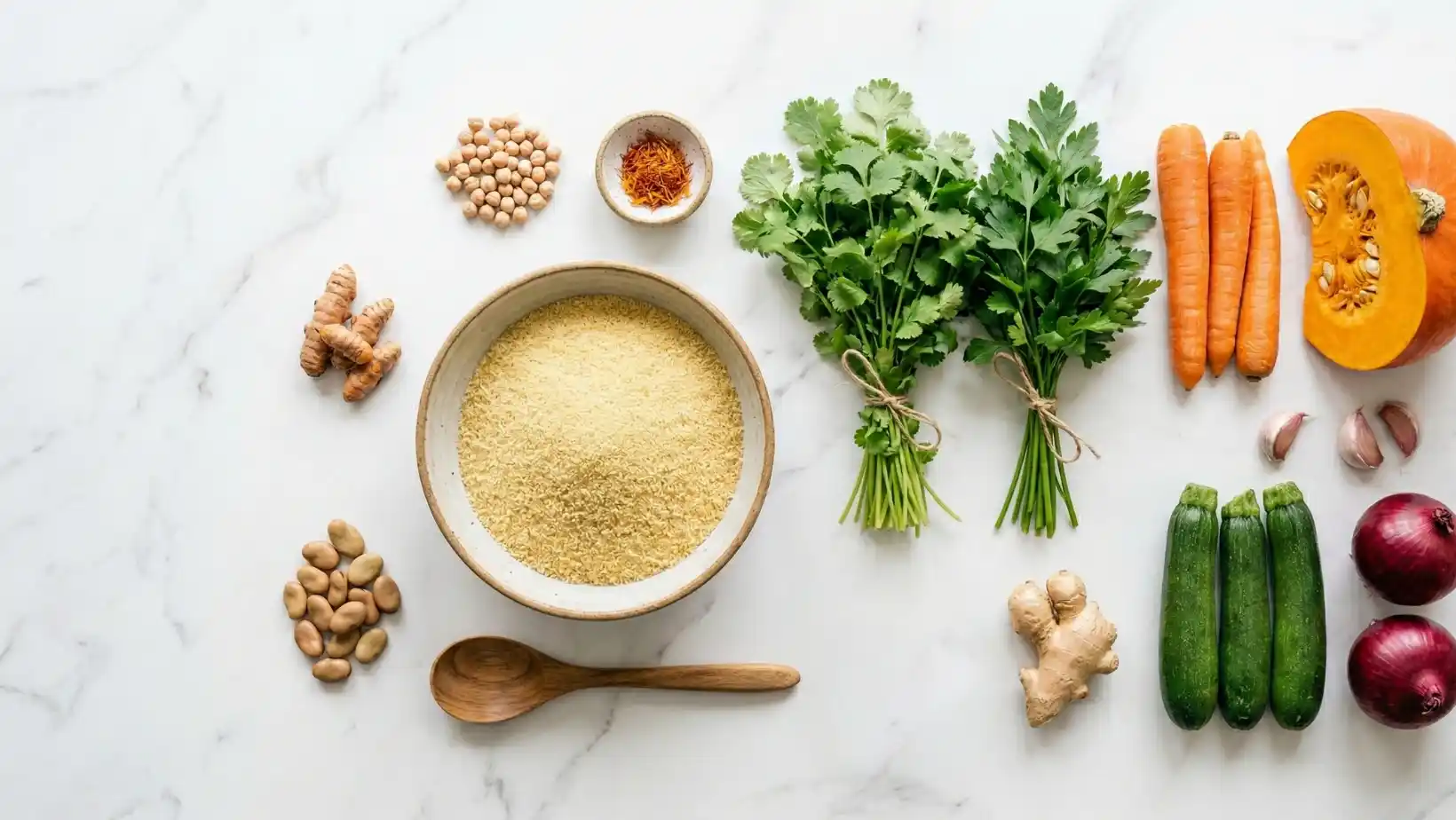
- 2 lbs boneless lamb shoulder or beef stew meat, cut into 2-inch pieces (or chicken thighs for a lighter option)
- 3 cups medium-grain couscous (premium quality for best fluffiness)
- 1/4 cup olive oil
- 2 large yellow onions, finely chopped
- 4 cloves garlic, minced
- 1 tablespoon fresh ginger, grated
- 2 tablespoons Ras el Hanout
- 1 teaspoon ground turmeric
- 1 teaspoon ground ginger
- 1/2 teaspoon sweet paprika
- Pinch of saffron threads (optional, soaked in 2 tbsp warm water)
- Salt and freshly ground black pepper to taste
- 8 cups water or low-sodium chicken/beef broth
- 1 (28 ounce) can crushed tomatoes
- 2 large carrots, peeled and cut into 2-inch chunks
- 2 medium turnips, peeled and quartered
- 1/2 small green cabbage, cut into 4 wedges
- 2 medium zucchini, trimmed and cut into 2-inch chunks
- 1 cup butternut squash, peeled, seeded, and cut into 2-inch chunks
- 1 (15 ounce) can chickpeas, rinsed and drained
- 1 red bell pepper, deseeded and cut into large chunks
- 1/2 cup fresh cilantro, chopped (plus more for garnish)
- 1/4 cup fresh parsley, chopped
- Harissa, for serving (optional)
How to Master Moroccan Couscous Recipe
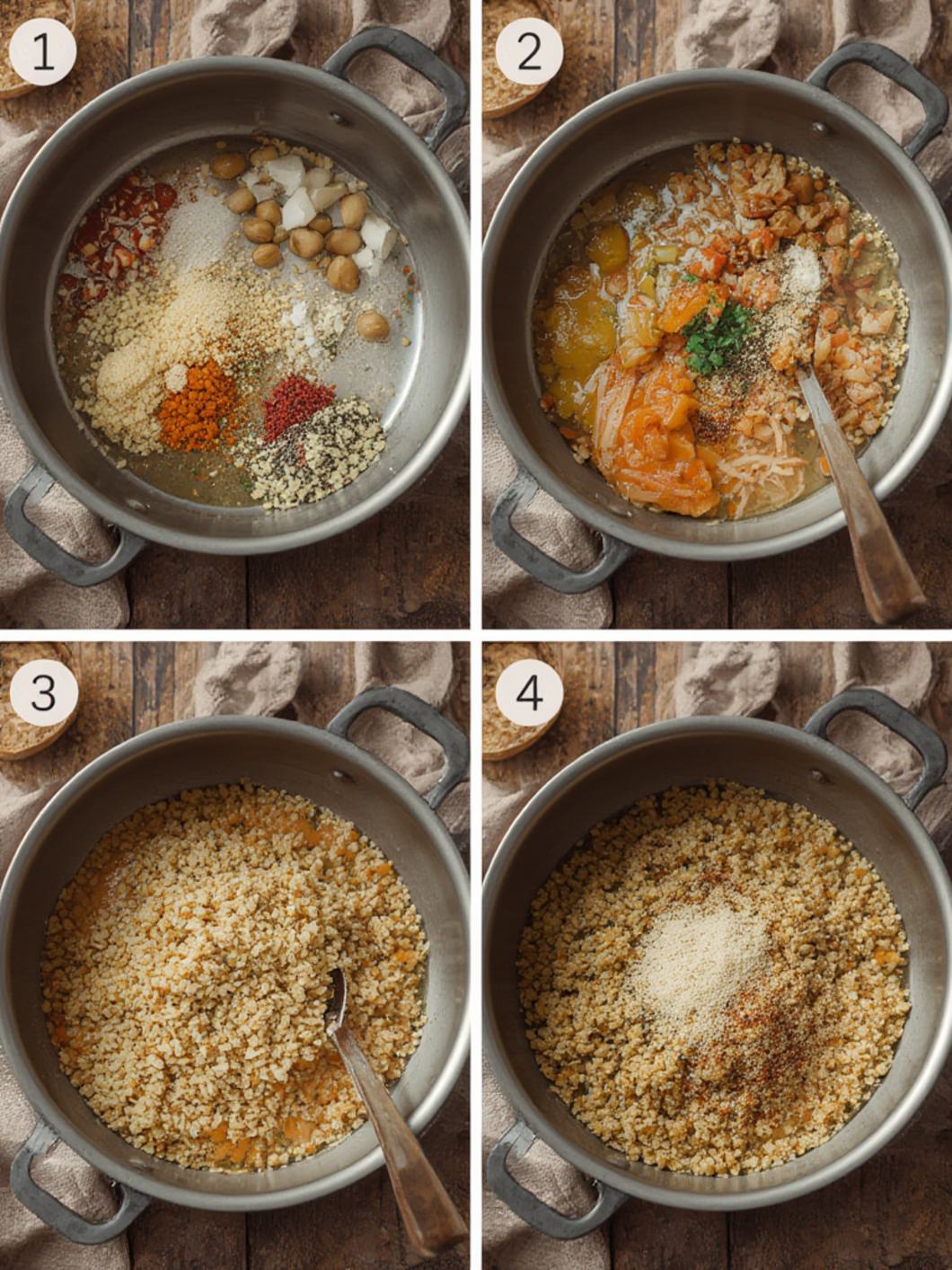
Achieving the perfect, light, and fluffy moroccan couscous recipe requires a few key steps, especially for the couscous itself. Follow this guide closely to create an unforgettable meal that truly captures the essence of Moroccan flavors, including the rich stew often associated with moroccan food recipes.
- Sear the Meat: Heat olive oil in a large tagine or heavy-bottomed pot (Dutch oven) over medium-high heat. Season the lamb/beef liberally with salt and pepper. Brown the meat in batches on all sides, about 5-7 minutes per batch. Remove meat and set aside.
- Build the Aromatic Base: Reduce heat to medium. Add chopped onions to the pot and sauté until softened and translucent, about 8-10 minutes. Stir in minced garlic and grated ginger, cooking for another 2 minutes until fragrant.
- Spice it Up: Add Ras el Hanout, turmeric, ground ginger, and paprika to the pot. Cook for 1 minute, stirring constantly, allowing the spices to toast and release their aromas.
- Simmer the Stew (First Stage): Return the browned meat to the pot. Add 8 cups of water or broth, crushed tomatoes, and the soaked saffron (if using). Bring to a boil, then reduce heat to low, cover, and simmer for 1 hour.
- Add Harder Vegetables: After 1 hour, add the carrots, turnips, and cabbage wedges to the pot. Stir gently, ensuring vegetables are submerged in the liquid. Continue to simmer, covered, for another 45 minutes.
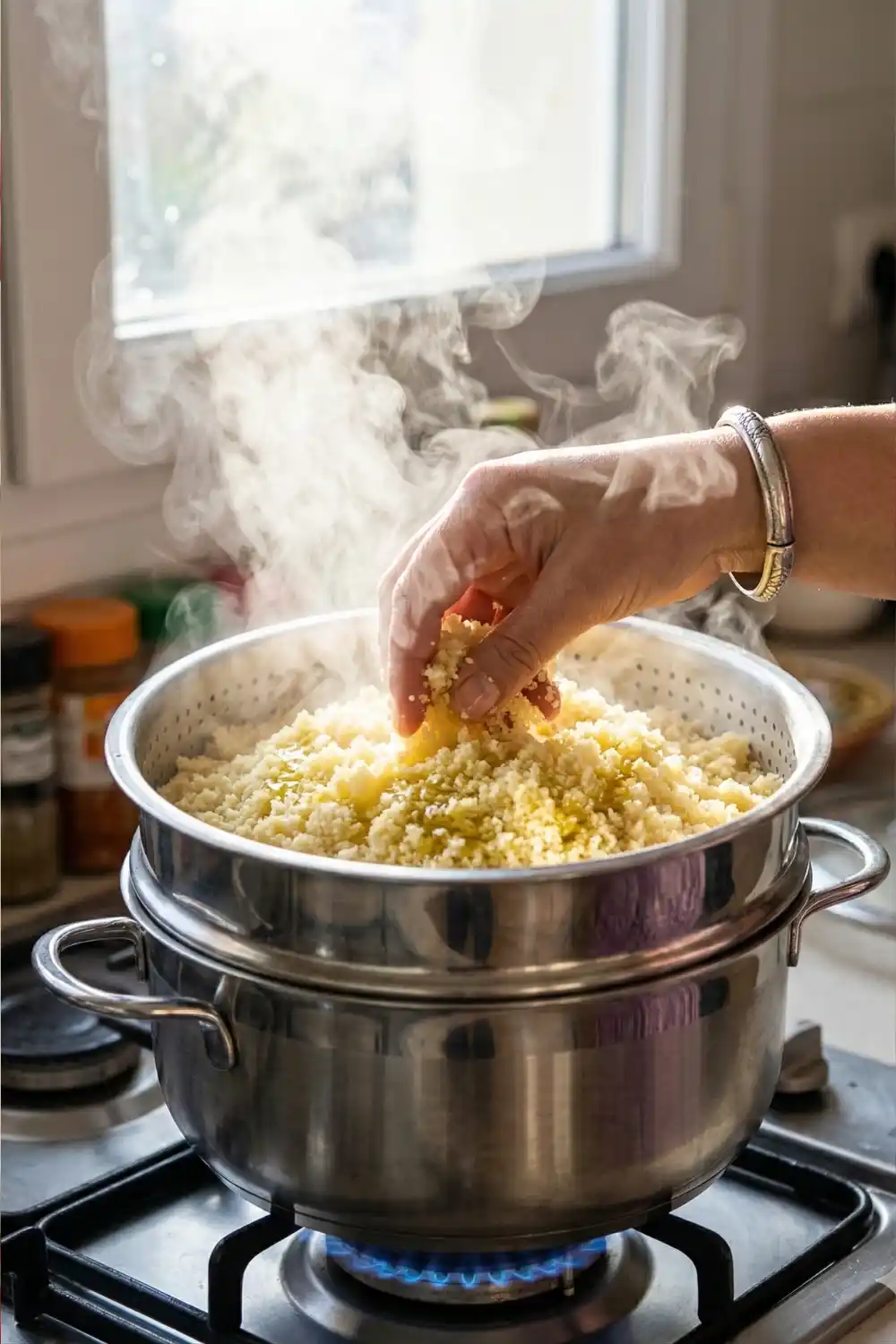
- Prepare the Couscous (First Steam): While the stew simmers, place the couscous in a large, wide bowl. Drizzle with 2 tablespoons of olive oil and a pinch of salt. Using your fingertips, rub the oil into the grains until lightly coated. Sprinkle 1 cup of cold water over the couscous and gently fluff with a fork or your fingers until the water is absorbed and grains separate. Transfer the couscous to the top basket of a couscoussier (or a large steamer basket lined with cheesecloth). Place over the simmering stew (ensure the top basket is sealed properly to trap steam). Steam for 20 minutes from when steam begins to escape from the top.
- Add Softer Vegetables: While the couscous is steaming, add the zucchini, butternut squash, chickpeas, and red bell pepper to the stew pot. Stir in chopped cilantro and parsley. Continue simmering.
- Prepare the Couscous (Second Steam): Carefully empty the steamed couscous back into the wide bowl. Break up any clumps with a fork. Sprinkle with another 1/2 cup of cold water and a pinch of salt, fluffing gently. Return to the steamer basket and steam for another 20 minutes.
- Final Couscous Fluff: Empty the couscous into the wide bowl for the final time. Add 1-2 tablespoons of butter (optional) and fluff vigorously with a fork until every grain is light, separate, and perfectly tender. Taste and adjust seasoning.
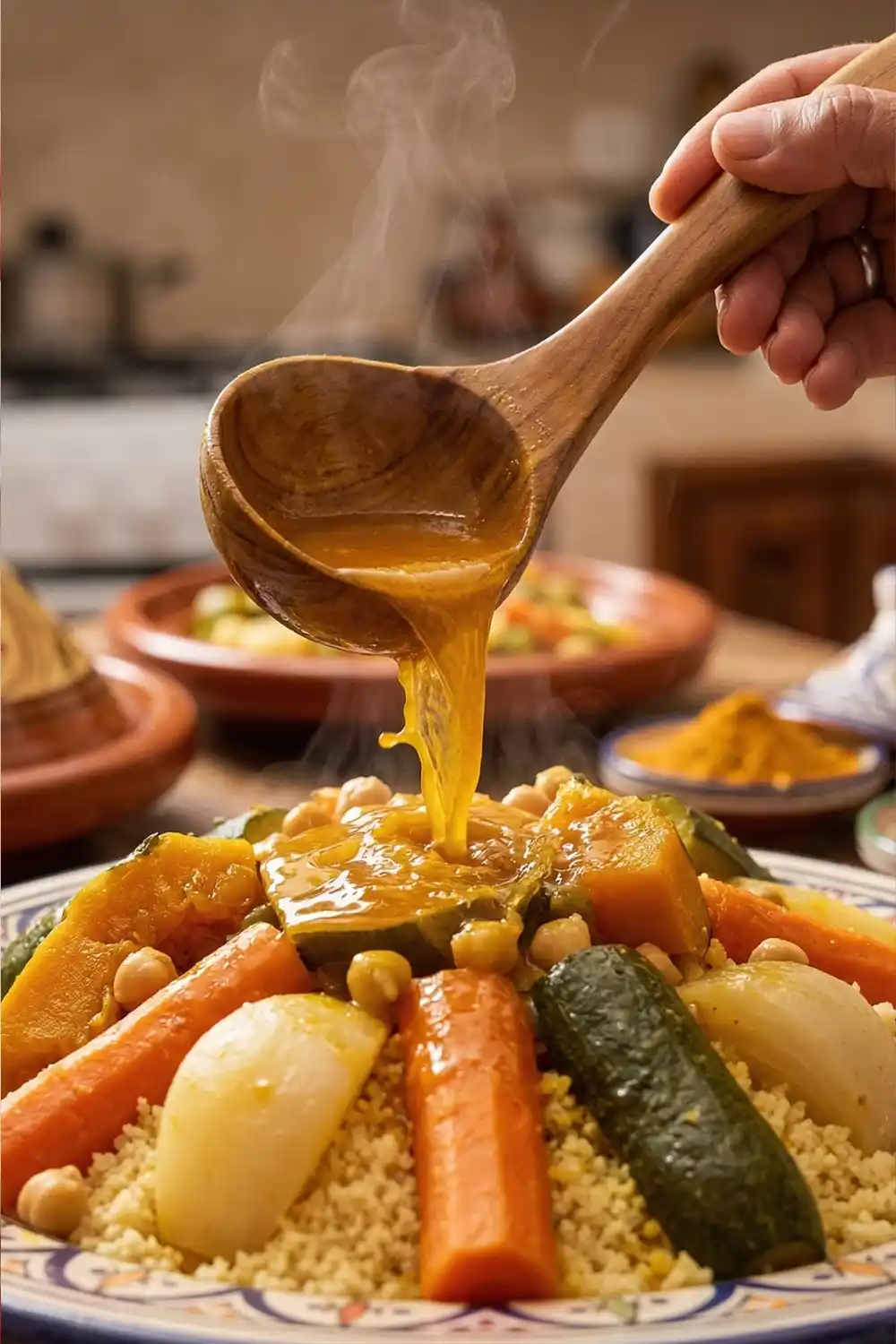
- Serve: Create a mound of fluffy couscous on a large serving platter. Make a well in the center and arrange the meat and vegetables in the well. Ladle plenty of the rich broth over the meat, vegetables, and some of the couscous. Garnish with fresh cilantro. Serve immediately with harissa on the side for those who prefer a spicy kick.
Fun Twists & Serving Ideas
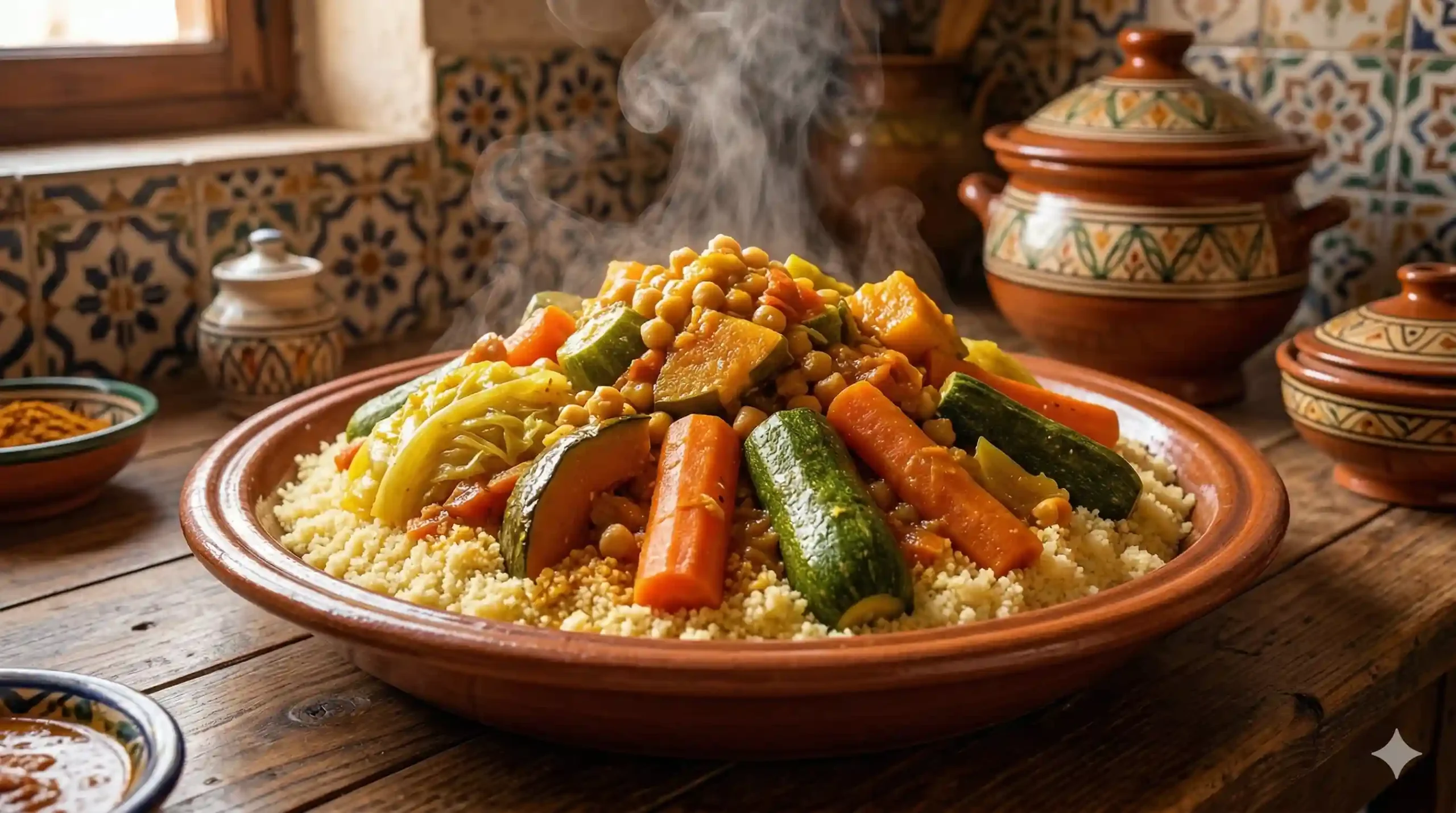
While our authentic recipe for moroccan food recipes is truly delightful, there are countless ways to customize and enhance your couscous experience:
- Vegetarian Powerhouse: Omit the meat and double the chickpeas or add a can of white beans. Incorporate other root vegetables like sweet potatoes or parsnips for added heartiness.
- Sweet & Savory Notes: For a traditional touch, add 1/2 cup of rehydrated dried apricots or prunes to the stew during the last 30 minutes of cooking. A sprinkle of toasted slivered almonds on top before serving adds texture and richness.
- Citrus Brightness: Stir in a tablespoon of preserved lemon rind (finely chopped) into the stew during the last 15 minutes, or garnish with thin slices of fresh lemon to cut through the richness.
- Herbaceous Freshness: Experiment with different fresh herbs. While cilantro and parsley are standard, a touch of fresh mint sprinkled over the couscous just before serving can add an unexpected layer of freshness.
FAQ & Reviews
Q: What’s the best type of couscous to use for this recipe?
A: For an authentic Moroccan experience, we recommend using medium-grain couscous. It provides a more substantial texture than instant or fine-grain varieties and holds up beautifully to the steaming process.
Q: Can I make this dish vegetarian or vegan?
A: Absolutely! This recipe adapts wonderfully. Simply omit the meat and increase the quantity of chickpeas or add lentils. Use vegetable broth instead of meat broth. The seven-vegetable base is already incredibly flavorful and satisfying on its own.
Q: How do I ensure my couscous is perfectly fluffy and not clumpy?
A: The key is gentle handling and proper hydration during the steaming process. Don’t over-saturate with water, and make sure to fluff it thoroughly with your fingertips or a fork after each steaming stage to separate the grains and allow them to absorb moisture evenly.
Q: Can I prepare parts of this recipe in advance?
A: Yes! The vegetable and meat stew can be made a day in advance and gently reheated. In fact, the flavors often deepen overnight. You can also chop all your vegetables ahead of time. The couscous is best steamed fresh just before serving.
Community Reviews:
⭐️⭐️⭐️⭐️⭐️ “A True Taste of Morocco!”
“I’ve always wanted to make authentic Moroccan couscous, and this recipe delivered! The instructions were clear, and the result was incredibly flavorful. My family devoured it. This is going into my regular rotation!” – Aisha K., March 2026
⭐️⭐️⭐️⭐️⭐️ “Better Than Restaurant Quality!”
“Having traveled to Morocco, I can say this recipe truly captures the essence of their incredible cuisine. The steaming method for the couscous made all the difference – it was so light and fluffy. A masterpiece!” – David L., February 2026
⭐️⭐️⭐️⭐️⭐️ “My New Favorite Comfort Food!”
“I was intimidated by couscous before, but this guide made it so accessible. The blend of spices and tender vegetables was perfect. It’s hearty, healthy, and absolutely delicious. Highly recommend!” – Sophia R., January 2026
Conclusion
Crafting an authentic moroccan couscous recipe is more than just cooking; it’s an immersive culinary journey. By following this comprehensive guide, you’ve not only mastered the art of fluffy couscous and a rich, seven-vegetable stew but also embraced the soulful essence of moroccan food recipes. This dish, steeped in tradition and brimming with vibrant flavors, is a testament to the joy of sharing good food. We hope this experience brings warmth and deliciousness to your table, encouraging you to explore more global cuisines.
Recipe Note
For enhanced flavor and easy reheating, consider storing any leftover stew and couscous separately. The stew can be gently reheated on the stovetop, and the couscous can be refreshed by steaming it briefly or warming it in the microwave with a splash of water, covered, until fluffy again. This ensures both components maintain their optimal texture and taste.